Traditions
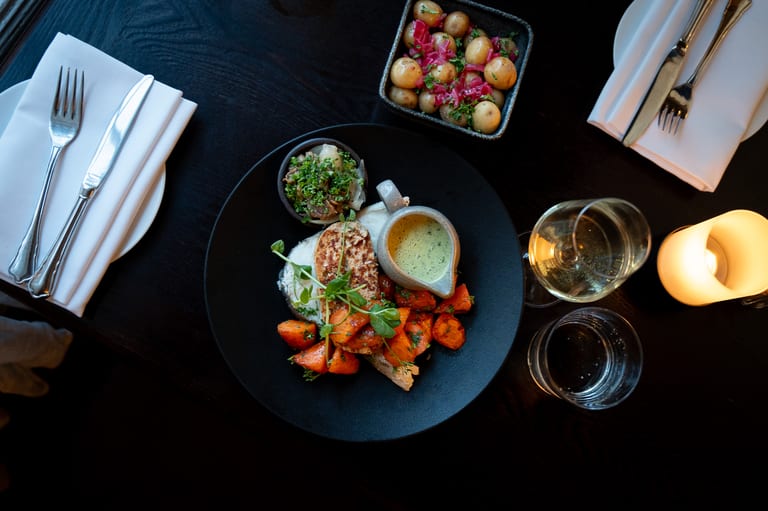
Skrei
Every year, roughly from mid-January until the beginning of March, what is described as the great miracle of Lofoten takes place. The Arctic cod, known as skrei when it reaches spawning maturity, swims in to the northern Norwegian coast to continue its lineage.
For centuries, this has been the greatest event for fishermen and fish lovers across the country, and here at Stortorvet Gjæstgiveri we keep this tradition alive.
As soon as the season is under way and we can get hold of good, fresh skrei, we serve this magnificent fish in the traditional manner, with liver and roe.
Lutefisk
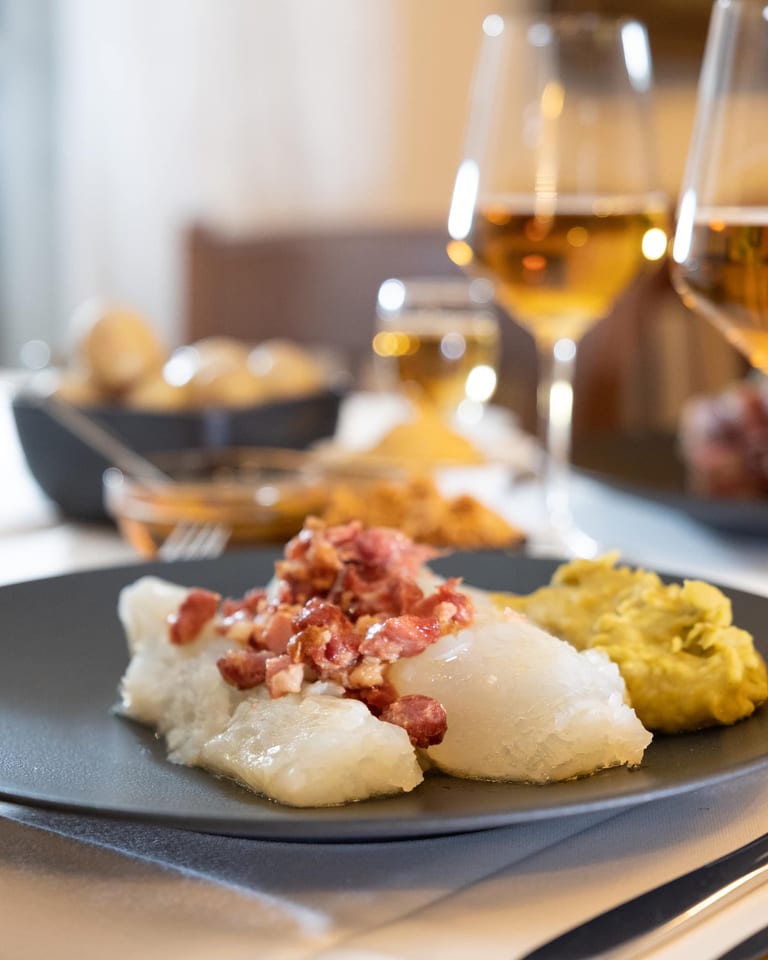
As most people know, lutefisk is what Stortorvets Gjæstgiveri is best known for. From mid-October through Christmas we serve several tonnes of lutefisk, accompanied by traditional side dishes in generous quantities.
There is a long tradition of eating lutefisk in Norway. During the Catholic era, eating fish on Christmas Eve was mandatory. Lutefisk can therefore be called the original Christmas food.
There are many stories about how lutefisk came to be. One tells of a stockfish warehouse that burned down. The fish left lying in the alkaline ash got wet in the rain that followed. Since food that was not poisoned was always eaten, the ash was washed off and the fish prepared. And so lutefisk was born.
Some believe that one of the main reasons lutefisk became such a success was that the lye-curing process saved on firewood — and firewood was expensive! Since the fish only needed to be gently simmered after curing, very little wood was required.
What is certain, at least, is that the preparation of lutefisk was first described in 1555 by Olaus Magnus, a Swedish clergyman. Three hundred years later, in 1845, the Norwegian author Hanna Winsnes recommended in her cookbook adding a little ash and lime to the cooking water for dried cod, to soften it and thereby reduce the cooking time.
Today it is common to use caustic soda for the curing process. Originally, however, the cooking water from ash — usually birch ash — was used.
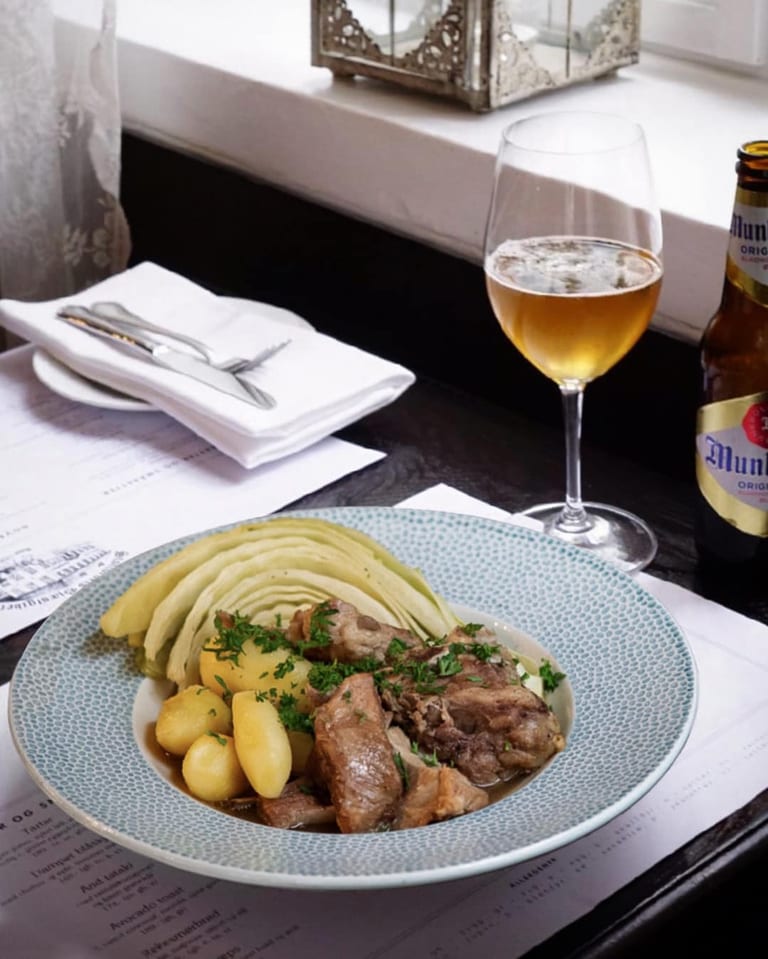
Fårikål
As autumn sets in, we enter the slaughter season for sheep and lamb, and it is time for Norway's official national dish — fårikål!
Fårikål has firmly established itself in Norwegian homes, and has even been given its own dedicated day and fan club in fårikålens venner!
Cooking meat and vegetables together is an old Norwegian custom, but it is not until the 1800s that recipes appear under the name «faar i kaal», and it is speculated that the dish originated in urban settings, where both language and customs were heavily influenced by Danish culture.
Fårikål Day is celebrated every year on the last Thursday in September, and we typically serve fårikål for three to four weeks around that time.